
· 8 min read
Fleece, flannel, cotton or sherpa: which fabric should you choose for winter pyjamas?
Warmth, softness, care, bobbling: an honest comparison of winter pyjama fabrics (cotton, fleece, flannel, sherpa) so you choose right first time.
- fabrics
- winter pyjamas
- buying guide
- flannel
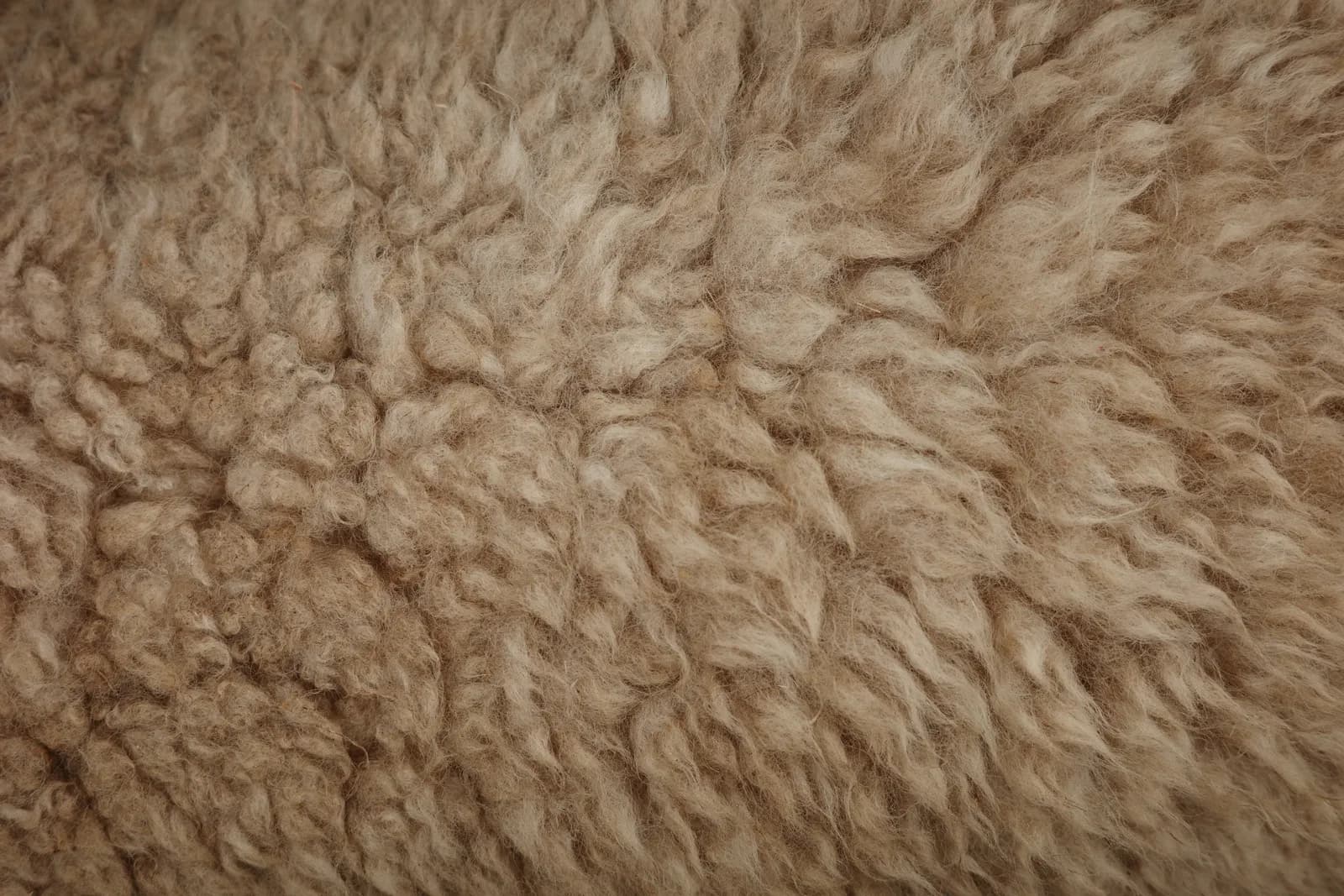
For winter pyjamas worn in a home heated to around 19 °C, thick flannel is the best compromise: warm, soft, breathable and stable over time. Cotton is the healthiest but the least warm. Thin microfleece warms you up instantly and bobbles just as fast. Sherpa is the warmest of all, and quickly becomes stifling as soon as the home is properly heated. Here's how these four fabrics really behave, season after season.
It's not the fabric that keeps you warm, it's the air
A fabric doesn't produce heat. It simply slows down the escape of the heat your body makes, and it does so by trapping still air. Air is an excellent insulator as long as it doesn't move: a fabric's whole thermal performance therefore comes down to its ability to hold tiny pockets of air between its fibres.
That's why a heavy fabric isn't necessarily a warm one. Denim is heavy and insulates poorly, because its weave is dense and flat. A light fleece insulates much better, because it's lofty. The technical term is loft, the volume of air trapped per unit of thickness.
Brushing, or raising, is the process that creates this volume. The fabric is passed over rollers fitted with fine points that lift the ends of the fibres to form a soft nap. A flannel brushed on both sides therefore holds noticeably more air than a jersey of the same weight, without weighing any heavier on your shoulders.
Cotton: the healthiest, but the least warm
Cotton is the go-to fabric for anything that touches the skin, and it deserves to be. It breathes well, it doesn't build up static, it copes with frequent hot washes and it doesn't hold on to odours. For summer pyjamas or for spring and autumn, it's hard to beat.
In the depths of winter, though, it shows its limits. Cotton readily absorbs moisture, and a waterlogged fibre conducts heat much faster than a dry one. A cotton jersey that has soaked up a night's sweat turns cold to the touch, exactly when you need that least. Hikers know this well, which is why they ban cotton from the layers worn next to the skin.
Its market share is shrinking in the face of synthetics: according to the annual reports from Textile Exchange, polyester alone accounts for more than half of global fibre production, far ahead of cotton, which is now below 25%. Thermal comfort doesn't explain this shift on its own; production costs count for at least as much.
There's one notable exception: cotton flannel, woven then brushed, which gains a lot of warmth without losing the fibre's breathability. More on that below.
Fleece: instant warmth, fast wear
Fleece is a raised polyester knit, invented in the late 1970s to replace wool. Its qualities are real and immediate: it warms you up in seconds, weighs next to nothing, dries very quickly and is cheap to produce.
Its flaws show up later, after a few dozen wears. Thin microfleeces, the entry-level ones, bobble where they rub, attract dust and give off unpleasant static in dry January interiors. They also hold on to odours longer than a natural fibre, which means more frequent washing, and therefore faster wear.
The microfibre question
Every wash of a synthetic textile releases fragments of fibre too small to be caught by wastewater treatment plants. The scale of the problem is documented: washing synthetic textiles accounts for around 35% of primary microplastic releases into the oceans, according to the benchmark study published by the IUCN in 2017.
That's no reason to ban synthetics, but it's a good reason to prefer a dense, thick knit to a cheap microfleece, and above all to wash less often. A good-quality fleece sheds fewer fibres, quite simply because it loses fewer.
Flannel: careful, the word covers two different fabrics
This is the point almost no product page clears up. The word "flannel" covers two distinct families, and the confusion explains a good share of the disappointment when a parcel arrives.
Cotton flannel is a woven fabric, then brushed on one or both sides. It's the fabric of lumberjack shirts and winter sheets. It breathes very well and ages beautifully, but it doesn't stretch and it takes a long time to dry.
Fleece flannel is a knit, usually polyester, thick and brushed on both sides. It's more supple, stretchier, warmer for the same thickness, and it dries in a few hours. This is the one you'll find on one-piece loungewear onesies.
How do you tell them apart before buying? Mentally tug at the fabric being described: if the seller talks about stretch and a plush feel, it's fleece flannel. If they talk about weave, checks and weight in g/m², it's cotton flannel. Both are good, but not for the same use.
For loungewear worn for hours on end, thick fleece flannel wins on almost every count: warmth, softness, suppleness, quick drying. It's exactly the fabric of the hooded Monster Pyjamas, brushed on both sides and cut wide to let air through.
Sherpa: the warmest, the least breathable
Sherpa imitates sheep's fleece with a very bulky looped knit. On paper, it crushes the competition for insulation. In practice, it only suits a specific context: genuinely cold homes, below 17 °C, or short wear, like a cardigan you throw on in the morning.
After an hour on a sofa in a heated room, sherpa turns clammy. It doesn't let moisture escape well, it doubles the bulk of your silhouette, and it triples the drying time after washing. On a full-length onesie, all that becomes downright uncomfortable.
It makes a good lining, rarely a good main fabric. Serious manufacturers use it inside a hood or on a collar, not for the whole garment.
What itches, and why
The prickling sensation has almost nothing to do with the perceived "quality" of the fabric, and everything to do with the mechanical stiffness of the fibres touching your skin. Textile research puts the threshold at around 30 micrometres in diameter: below that, the fibre bends on contact with the skin; above it, it presses on the nerve endings. That's why fine merino wool doesn't itch while a jumper in coarse wool is unbearable.
On pyjamas, three other factors weigh at least as much:
- Inside seams, especially at the crotch and under the arms, where there's constant friction.
- Stiff labels, to blame for a large share of the itching put down to the fabric.
- Static electricity, which multiplies tiny shocks on dry winter skin.
A simple test in a shop: run the fabric over the inside of your wrist, not your palm. The skin there is much closer to that of the nape and neck, the two areas that make you reject a garment.
The comparison in one table
| Fabric | Warmth | Breathability | Bobbling resistance | Drying | Ideal use |
|---|---|---|---|---|---|
| Cotton jersey | Low | Excellent | Good | Slow | Spring and autumn, very warm homes |
| Cotton flannel | Medium | Very good | Good | Slow | Classic pyjamas, sheets |
| Thin microfleece | Medium | Medium | Low | Fast | Small budget, occasional wear |
| Thick fleece flannel | High | Good | Good | Fast | Loungewear onesie, winter |
| Sherpa | Very high | Low | Medium | Very slow | Cold homes, short wear |
What really decides how long it lasts
Made from the same fabric, two pairs of pyjamas won't age the same way, and the difference comes down to three details you can check before buying.
First, fabric weight: below 200 g/m², a fleece goes flat within a season. Next, knit density: a fabric you can see through when you stretch it will lose its nap quickly. Finally, the finishing, meaning the quality of the zip, reinforced seams at the crotch and no loose threads.
Care does the rest, and it's less demanding than you'd think: 30 °C, delicate cycle, inside out, no fabric softener, air dry. The reasons are explained in our guide to washing fleece pyjamas, but above all remember that fabric softener is a brushed fabric's worst enemy: it sticks the fibres together and removes precisely the volume of air that keeps you warm.
So, which fabric is right for you?
- You often get too hot at night, or you live in a well-heated home: cotton jersey, or perhaps a light cotton flannel.
- You want loungewear to wear for hours, from the sofa to breakfast: thick fleece flannel, roomy cut.
- Your home drops below 17 °C in winter: sherpa as a cardigan or lining, over a breathable layer.
- You want the best lifespan for the price: avoid entry-level microfleece; that's where the gap in quality is most visible after six months.
One last point, true of every fabric: the cut matters as much as the material. A tight garment squashes the insulating layer of air and cancels out part of the thermal benefit. For winter, loose always beats fitted.
Cover photo: Shiori Miyashita / Unsplash