
· 6 min read
How to fold a kigurumi and store it without damaging it
How to roll a kigurumi up inside its own hood, store it for the summer safe from moths and take it travelling while keeping its fleece soft.
- how to fold a kigurumi
- how to store a kigurumi
- kigurumi care
- kigurumi pilling

How do you fold a kigurumi without squashing its hood or creasing its fleece? The most compact method is to roll the onesie up on itself, then turn the hood over the top to close the roll, like a pouch. It works for a suitcase, a drawer or a night at friends'. This guide walks through that fold step by step on a style like the Star Monster Kigurumi, then sets out the rules for storing it all summer away from moths and dust.
How to roll a kigurumi up, hood and all
The roll fold takes five moves and gives you a sausage that doesn't unroll. It needs a hood big enough to cover the roll: check this on your own style before you roll it tight.
- Close everything. Do the zip or the press studs up to the collar. On the Star Monster Kigurumi, close the low zip too: a zip left open snags the fleece.
- Lay the onesie flat, back against the table, hood spread out above the collar.
- Fold the sleeves across the chest, then fold each leg inwards to get a rectangle the width of the shoulders.
- Roll tightly from the feet up to the collar, smoothing the fleece with each turn so you don't trap any creases.
- Turn the hood over the roll: it wraps around it and keeps it closed.
On a decorated hood (ears, horns, a star or felt teeth), keep the decoration on the outside of the roll: folded inside, it comes out with marks. It's a fun game for a child at the end of a sleepover: rolling up their monster and "putting its hood on".
Folding flat for a drawer or a shelf
For everyday storage, a flat fold is enough and marks the fleece less than a tight roll. Close the onesie, lay it face down on the table, fold the sleeves over the back, fold the legs in half upwards, then fold the whole thing over at the waist. The hood stays on top, flat.
Between nights, a hanger is fine, as long as it's a wide one: a thin wire hanger leaves marks on the shoulders. A night in the open air also freshens up the fleece between washes, as explained in our guide to washing and caring for fleece pyjamas.
Storing a kigurumi for the summer: clean, dry and sealed
Before storing it for several months, wash the kigurumi, let it dry completely, then shut it away in a well-sealed container.
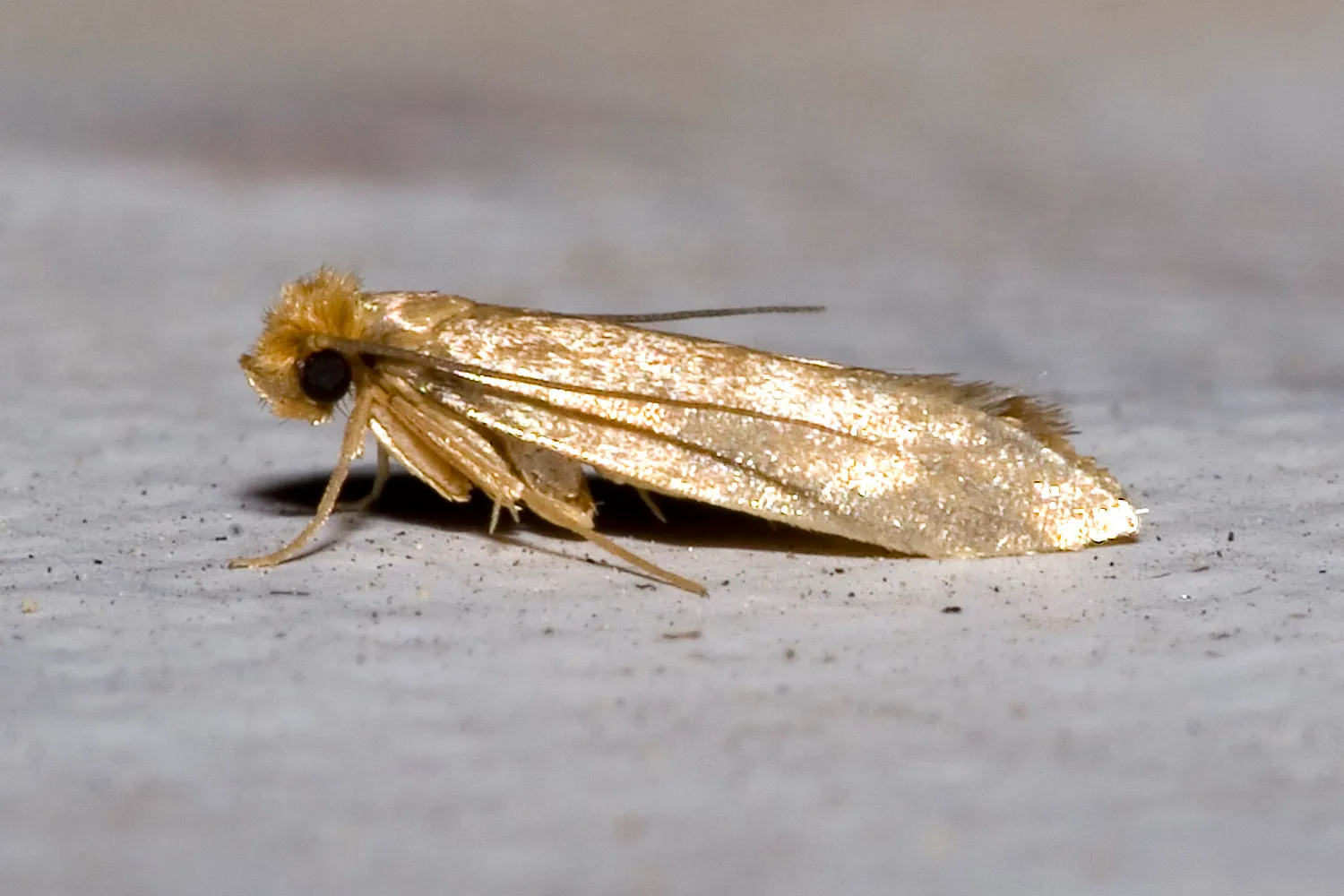
Photo: Olaf Leillinger / Wikimedia Commons (CC BY-SA 2.5)
Washing first. The University of Kentucky's entomology department recommends washing textiles before storing them for a long time: washing removes any eggs and larvae, along with the sweat odours that attract moths (University of Kentucky Entomology, "Clothes Moths", ENTFACT-609). Follow each style's care label: machine wash at 30 °C, delicate cycle and air dry for the Star Monster Kigurumi.
The risk of moths is low with fleece, but not zero. According to the same fact sheet, moth larvae digest the keratin in animal fibres (wool, fur, silk, feathers). Cotton and synthetics such as polyester are rarely attacked, unless they're blended with wool or stained with food or body oils. And fleece is a synthetic textile made from polyester (PET) (Wikipedia (French), "Polaire (textile)"). So a kigurumi stored dirty is still at risk, and it may sit next to a wool jumper that does attract moths.
A sealed container. The University of Kentucky advises storing cleaned textiles in tightly sealed plastic bags or boxes. Fleece has another reason to go in one: it builds up static electricity, and therefore dust and pet hair, as Wikipedia points out. A closed box stops it coming out covered in cat hair when you get it out again in September.
Two safety rules if you have children at home:
- Chemical moth repellents out of reach. The University of Kentucky points out that balls, flakes or crystals based on naphthalene or paradichlorobenzene can be dangerous if misused, and should never be scattered in an open cupboard that children or pets can get to. Read the label, and if any is swallowed, call the emergency services (15 in France, 112 anywhere in Europe).
- Plastic bags up high. An empty storage bag isn't a toy: keep it out of little ones' reach.
Taking a kigurumi travelling or to a sleepover
The hood roll is the handiest format in a suitcase. It takes up little room and doesn't unroll when you rummage through the bag. For a grown-up pyjama party or a weekend away, put it on top rather than under heavy items, which would flatten the fleece and the hood decoration.
For a child sleeping over at friends', roll their kigurumi up with their cuddly toy in the middle: everything's in one place. Our ideas for organising a kids' sleepover list the other things to pack.
When you arrive, unroll it, give it a shake and hang it up for a few hours so the fleece can breathe.
Keeping the fleece soft and avoiding pilling
Squashed fleece just needs a shake and some air; fleece that pills mostly needs less friction. Wikipedia notes that lower-quality fleece tends to pill. For all fleece, storage matters as much as washing:
- Don't cram the kigurumi into the bottom of a box that's too small, under a pile of jeans: friction and pressure damage the fibres.
- Shave off the bobbles with a fabric shaver rather than pulling them off by hand; the guide how to wash fleece pyjamas details the washing habits that keep them from appearing.
- Faux fur gets brushed. The product page for the Monster Bunny Faux Fur Pyjamas recommends a light brushing after air drying to give the fur its volume back. Fold it flat rather than in a tight roll.
- Cable knits don't like heat. The product page for the Cable Knit Teddy Bear Onesie rules out the tumble dryer, which flattens the cables. Fold it loosely to keep the ribs in relief.
In short
To fold a kigurumi, close it, fold in the sleeves and legs, roll it up tightly from the feet and cap the roll with its hood. For the summer, wash it, let it dry completely and store it in a sealed container, away from wool jumpers. Keep chemical moth repellents and plastic bags out of children's reach. Before wearing it again, give it a shake and hang it up overnight. If you're still deciding on a style, our guide kigurumi: what it is and how to choose one details the things to look for, and the Star Monster Kigurumi comes in sizes from kids to adults. Every style is in the shop.
Cover photo: Familydestinationsguide.com Images / Wikimedia Commons (CC BY 2.0)